
An accessory dwelling unit (ADU) is defined as a secondary residential unit on a single-family property, and its presence directly raises resale value. Fully permitted ADUs add 20%–35% to a home’s sale price compared to similar properties without one. The premium climbs higher in strong urban rental markets and drops in rural areas. Understanding what is ADU resale impact means knowing that permits, ADU type, local demand, and appraisal method each play a distinct role in how much value a buyer will pay for at closing.
What is ADU resale impact and how is it measured?
ADU resale impact is the measurable increase in a property’s sale price that results from having a permitted, functional accessory dwelling unit on the lot. Appraisers and real estate agents quantify this through comparable sales, cost analysis, and income capitalization. The result is a dollar premium above what the same home would sell for without the unit.

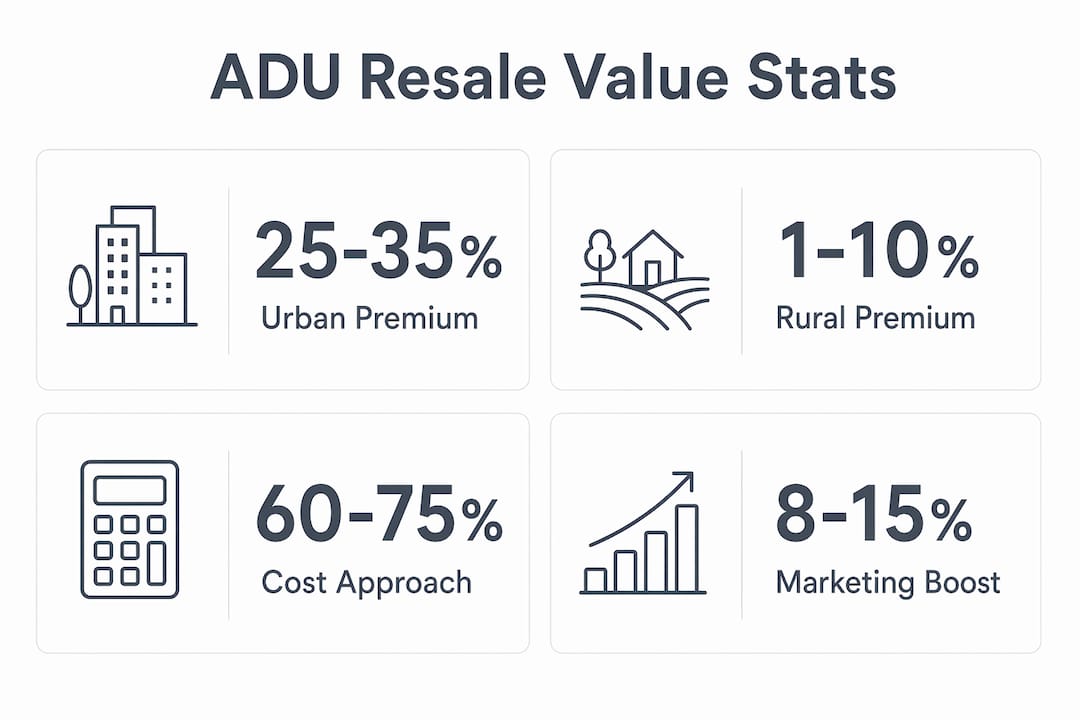
The size of that premium varies widely. High-demand urban markets see premiums of 25%–35%, while rural markets average 15%–20%. That gap reflects rental demand. Where tenants compete for housing, buyers pay more to acquire a property that already generates income.
Permits are the single most important variable in this calculation. An unpermitted ADU is treated by appraisers as unfinished storage space, not as a dwelling. That distinction alone can mean the difference between a 30% value lift and near-zero added value.
How do ADU characteristics affect resale value?
The physical design of an ADU determines its resale multiplier. Not all units add value equally, and the gap between types is significant.
- Detached ADUs bring a resale multiplier of 1.30–1.40x their construction cost. A $150,000 detached build can add $195,000–$210,000 in appraised value.
- Garage conversions return only 1.05–1.15x construction cost. They cost less to build but also add less value because buyers perceive them as less private and less functional.
- Separate utility metering is a major value driver. Separately metered ADUs add 25%–35% to home value; units sharing meters with the main house add only 12%–20%.
- Size and layout affect rental income potential, which feeds directly into the income approach appraisal. A studio ADU rents for less than a one-bedroom unit. Lower rent means lower capitalized value. Choosing the right ADU size and layout before you build has a direct effect on what an appraiser assigns at resale.
- Functional amenities such as a full kitchen, private entrance, and in-unit laundry increase buyer appeal and rental income, both of which lift the final sale price.
Pro Tip: If you are deciding between a detached build and a garage conversion, the detached unit will almost always outperform at resale. The higher upfront cost is offset by a stronger multiplier and better rental income potential.
What role do permits and legal compliance play in ADU resale impact?
Permits are not a formality. They are the foundation of every dollar of value an ADU contributes at resale. Unpermitted ADUs are valued as unfinished space, resulting in 15%–25% lower sale prices and complicating buyer financing. That is not a minor discount. It can erase the entire investment.
The financing effect is equally damaging. Lenders underwriting conventional mortgages through Fannie Mae or Freddie Mac require that all structures on a property meet local code. An unpermitted unit can disqualify a buyer from financing entirely, which shrinks your buyer pool to cash purchasers only.
The time-on-market difference is stark. Permitted ADUs close in a median of 35 days. Unpermitted units take 40%–60% longer, with a median of 68 days. Every extra week on market costs sellers in carrying costs, negotiating leverage, and buyer confidence.
Here is what full legal compliance looks like in practice before you list:
- Obtain a certificate of occupancy for the ADU from your local building department. This is the document appraisers and lenders require.
- Confirm separate utility metering or document the shared-meter arrangement clearly so appraisers can account for it accurately.
- Gather all permit history including original building permits, inspection sign-offs, and any variance approvals.
- Verify zoning compliance to confirm the ADU is permitted under current local ordinances. Zoning rules change, and local ADU policy reforms can affect what is grandfathered versus what requires correction.
- Resolve any open permits before listing. An open permit flags a property as legally incomplete and triggers lender scrutiny.
Pro Tip: Pull your property’s permit history from your county assessor’s office before you list. Buyers’ agents and lenders will find any gaps. Finding them first gives you time to resolve issues without losing a deal.
How do local market conditions influence ADU resale premiums?
Market conditions set the ceiling on what an ADU can add to your sale price. The same unit built in two different cities can produce very different returns.
| Market Type | Average ADU Resale Premium | Key Driver |
|---|---|---|
| High-demand urban | 25%–35% | Strong rental demand, low vacancy |
| Pacific region average | ~36% | High rents, housing scarcity |
| Midwest markets | ~54% | Lower home prices, strong relative ROI |
| Rural or low-demand | 15%–20% | Limited rental market depth |
Midwest markets average a 54% resale value increase with ADUs, which outpaces the Pacific region’s 36% average. That result surprises most investors. The explanation is math: when base home prices are lower, the rental income an ADU generates represents a larger percentage of total property value.
Neighborhood ADU density also matters. When multiple homes on the same street have ADUs, appraisers have stronger comparable sales data to work with. That makes it easier to justify a full premium at appraisal. In neighborhoods where ADUs are rare, appraisers rely more on the cost approach, which typically yields a more conservative number.
Legislative trends are accelerating ADU adoption in many states. Florida lawmakers have proposed expanding ADU rights statewide as an affordable housing solution. Markets where legislation is loosening tend to see faster appreciation of ADU-equipped properties as buyer awareness grows.
What appraisal methods are used to value ADUs?
Appraisers use two primary methods to value ADUs, and the method chosen has a direct effect on the number that appears in the appraisal report.
“The income approach, which capitalizes rental income at local market rates, consistently produces higher appraised values for ADUs than the cost approach alone. As of march 2026, Fannie Mae and Freddie Mac guidelines allow rental income to count 100% toward buyer qualification, making the income approach the preferred method for lenders and sellers alike.”
The cost approach attributes 60%–75% of construction costs toward appraised value. If you spent $200,000 building a detached ADU, the cost approach may only credit $120,000–$150,000 in added value. That gap is called an appraisal gap, and it catches many homeowners off guard.
The income approach works differently. It takes the ADU’s market rent, applies a local capitalization rate, and converts that income stream into a lump-sum value. Rental income now counts 100% toward buyer qualification under the 2026 Fannie Mae and Freddie Mac guidelines. That change makes income-approach appraisals more powerful and more lender-friendly than ever before.
Proper marketing with verified permits and clear rental income projections can increase final sale prices by 8%–15%. Presenting documented rental history or a professional rental market analysis to buyers shifts the conversation from “what did it cost to build” to “what will it earn.” That reframe consistently produces higher offers.
How can homeowners and investors optimize ADU resale impact?
Maximizing the resale value of adus requires deliberate choices before, during, and after construction. The build quality matters, but so does everything that happens at the point of sale.
- Permit everything. No shortcut saves money at resale. An unpermitted unit destroys financing options and shrinks your buyer pool to cash buyers only.
- Choose detached over attached when possible. The ADU investment benefits of a detached unit include a stronger resale multiplier, higher rental income, and better appraisal outcomes.
- Install separate utility meters. This single upgrade can shift your value premium from the 12%–20% range to the 25%–35% range.
- Document rental income. If the ADU is currently rented, provide lease agreements, rent rolls, and bank deposit records. Buyers and appraisers respond to verified numbers.
- Market the income, not just the space. List the ADU’s current or projected monthly rent in the property description. Buyers who understand the income potential pay more.
- Educate your buyer’s agent. Many agents are unfamiliar with income-approach appraisals. Walking them through the 2026 Fannie Mae guidelines on rental income qualification can prevent a deal from falling apart over an appraisal gap.
Pro Tip: Commission a pre-listing appraisal that specifically uses the income approach. Hand that report to every buyer’s agent who tours the property. It sets the value anchor before negotiations begin.
Key Takeaways
A fully permitted, detached, and separately metered ADU is the most reliable way to add 25%–35% to your property’s resale value in a high-demand market.
| Point | Details |
|---|---|
| Permits drive value | Unpermitted ADUs add near-zero value and extend closing time by 40%–60%. |
| Detached units outperform | Detached ADUs return 1.30–1.40x construction cost versus 1.05–1.15x for garage conversions. |
| Income approach wins | The 2026 Fannie Mae and Freddie Mac guidelines make rental income count 100% toward buyer qualification. |
| Market location matters | Midwest markets average 54% resale premiums; Pacific markets average 36%. |
| Marketing closes the gap | Verified permits and rental projections can increase final sale price by 8%–15%. |
Why I think most homeowners underestimate ADU resale value
Most homeowners I talk to think of their ADU as a rental income tool. They build it, rent it, and assume the resale value will take care of itself. That assumption costs them money.
The real opportunity is in the appraisal strategy. The shift to income-approach appraisals under the 2026 Fannie Mae guidelines is the most significant change in ADU valuation in a decade. Homeowners who understand this and document their rental income properly will see appraisals that reflect actual market value. Those who do not will get a cost-approach number that undersells the asset.
Long-term ADU ROI typically requires a 10–15 year horizon to fully materialize. That is not a warning. It is a planning tool. If you are buying or building with a five-year exit in mind, price that into your decision. If you are in for the long term, the combination of rental income, appreciation, and resale premium makes ADUs one of the strongest single-property investments available to individual homeowners.
The investors I have seen get the best outcomes treat the ADU like a separate business unit from day one. They permit it correctly, meter it separately, document every dollar of income, and market it with a professional rental analysis at resale. That discipline is not complicated. It is just consistent.
— Rudy
How Live Large™ helps you build and sell with confidence
Building an ADU that holds its value at resale starts with getting the details right from the beginning. Live Large™ works with homeowners and investors across the full process, from site planning and permitting to construction and financing, so that every unit is built to appraise and sell at its full potential.
If you are in Florida, the Tampa ADU policy reforms have opened new opportunities for homeowners who want to add a permitted unit and capture the resale premium that comes with it. Live Large™ specializes in backyard ADU homes designed to meet local code, maximize rental income, and hold strong value at resale. Reach out to the Live Large™ team to get a project assessment tailored to your property and market.
FAQ
How much does an ADU increase home resale value?
A fully permitted ADU adds 20%–35% to a home’s resale value, with the highest premiums in high-demand urban markets. Unpermitted units add near-zero value and can lower sale prices by 15%–25%.
What is the ADU resale multiple for detached units?
Detached ADUs carry a resale multiple of 1.30–1.40x their construction cost. Garage conversions return only 1.05–1.15x, making detached builds the stronger investment for resale purposes.
Do permits really affect how fast a home with an ADU sells?
Permitted ADUs close in a median of 35 days. Unpermitted units take 40%–60% longer due to financing complications, which reduces buyer pool size and negotiating leverage.
How do appraisers value an ADU in 2026?
Appraisers use either the cost approach, which credits 60%–75% of construction cost, or the income approach, which capitalizes rental income into a lump-sum value. The 2026 Fannie Mae and Freddie Mac guidelines favor the income approach by allowing rental income to count 100% toward buyer qualification.
Does ADU resale value differ by region?
Midwest markets average a 54% resale premium with ADUs, while Pacific region markets average around 36%. Rural markets see the smallest gains, typically 15%–20%, due to lower rental demand.